The story of Tetiana Surina: depressive disorder as a struggle both from outside and inside oneself
Share
2025-01-16
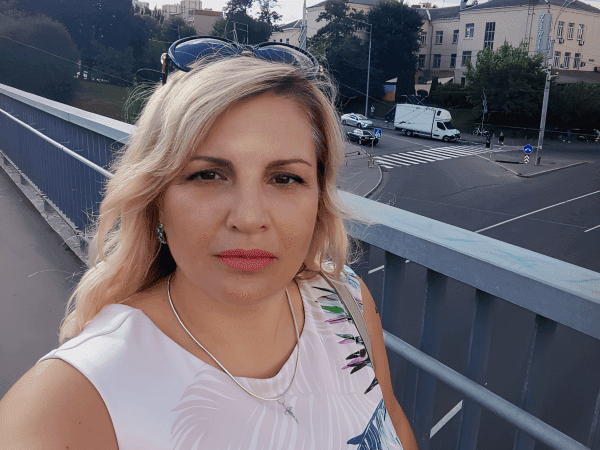
Dress and makeup - this is how Tetiana appeared at our Zoom interview. She willingly shared her life story for all 5 (!) hours, vividly and in detail describing the cause-and-effect relationships and nuances of behavior - both her own and those around her. At first glance, you wouldn't say that this girl has been dealing with depressive disorder for years. But, firstly, this is one of the misconceptions about this mental disorder. Secondly, Tetyana has come a long way to healing and is only now beginning to see it on the horizon.
When Tetiana's mother was pregnant with her, her father left the family. The mother was left alone with the children and was experiencing severe stress about this. The girl's two older brothers also needed attention at that time. "I still think that I was stressed while still in my mother's womb. And this was why I took everything to heart as a little girl," the heroine reflects. The girl's delicate psyche, unfortunately, was further affected by physical abuse and emotional coldness from her mother.
Despite the trials of fate, Tetiana grew up obedient and studied diligently. When she was a teenager, one of her brothers died. At that time, she supported her mother: "I comforted her, although I myself was scared."
Later, Tetiana studied to be a cook. Working in her profession turned out to be physically and morally difficult for the girl, but she coped and contributed to the family budget from an early age. But at home, a tense atmosphere awaited her every evening: "There was no one to lean on. The closest person was my mother, and I was afraid of her." That's when the first serious difficulties with mental health appeared — panic attacks.
In the 2000s echoes of the Soviet era were still felt: total rejection and ignoring of the topic of mental health in society. Despite this, Tetiana gathers her courage and, through her shame, makes her way from the district therapist to the psychiatrist. In the end, she was only prescribed a course of tranquilizers with unpleasant side effects. But that was enough for a while.
Life went into a whirlwind: changing professions, working with people, getting married. For a certain period, Tetiana even provided for her family on her own. And yet there was the temperature of 37.2, constant fatigue, nervousness, tearfulness, panic attacks again — psychosomatics was bothering her. At first, she blamed her thyroid gland for all her problems. The lack of support and accessible psychoeducation did their job: “A girl with zero self-esteem. From the outside, I gave the impression of a confident, always cheerful, smiling, normal girl.”
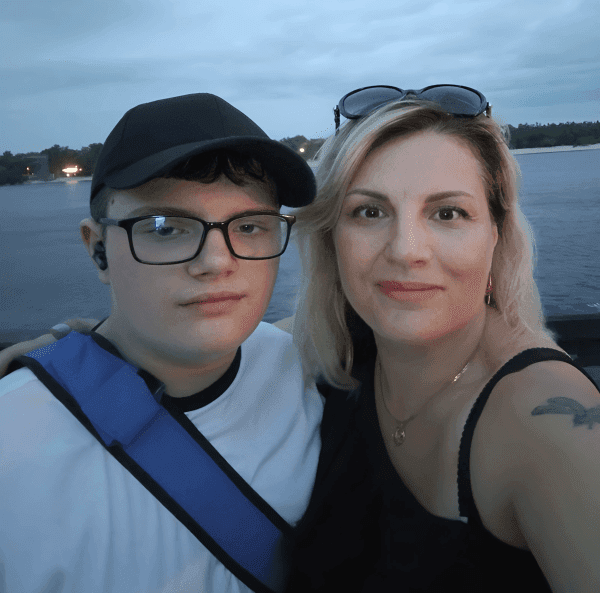
The ice melted after the birth of her son and the divorce. “Before the birth of my child, I still had the resources to stand up for myself, not to pay attention. For 3 years after giving birth, I was getting weaker,” recalls Tetiana. At the age of 30, she had a back injury and was diagnosed with a spinal disease. The girl realized she was pushing through life by force and it was time to “save herself.” In the following years, the girl again searched for help and encountered a kaleidoscope of incompetence on the part of doctors: they told her to pull herself together, not to get carried away, to cheer up, to read the New Testament, they wrote her affirmations on a separate piece of paper…
“People still don’t understand that depression is an illness. They think that “you’ve never seen real grief in your life, you have arms and legs — get to work!” You don’t know what a person feels! From the outside, a person’s head looks clean, their clothes are tidy, they don’t lie around under the bridge, don’t hang out near a pub with a bottle, didn't lose their grip. And you ask why is that? Because I am responsible for my child. Thanks to my child, I didn’t just disappear, I think so,” Tetiana is touched by the fact that society, including doctors, still mostly does not take depressive disorders seriously.
Meanwhile, the global statistics on depression are growing every year. According to the World Health Organization, by 2024, about 3.8% of the world’s population will be diagnosed with depressive disorders during their lifetime*. And Ukraine’s indicators have been deteriorating very rapidly in recent years. Some ratings call us the country No. 1 in terms of the frequency of mental disorders relative to the population. According to research by the “Pharmxplorer Database” LLC “Proxima Research”, 2009-2024”, the number of prescriptions for antidepressants in Ukraine over the past 5 years has increased 2.6 times, and more than half of them were prescribed to patients under the age of 40**. At the same time, it remains a mystery how many people continue to still ignore their symptoms due to shame or ignorance.
Our heroine was motivated to finally overcome her shame for her own illness by her responsibility for her son. The turning point came when he was diagnosed with autism spectrum disorder (ASD). Another disappointment is that this did not happen at the request of teachers at school who complained about his behavior, or even at the recommendation of a psychiatrist. A girl she knew who had a child with a disability suggested that Tetiana signed up her son for a specialized examination.
From that time on, Tetiana began studying psychology on her own. This helped her, first of all, to better understand herself and her son. At the age of 37, she finally found the root of her health problems — a psychiatrist diagnosed her with a depressive disorder. The girl begins to take antidepressants systematically, but that's not all: "The drugs gave me energy, but the habit of looking at the world through the prism of negativity remained. I had to work on myself a lot."
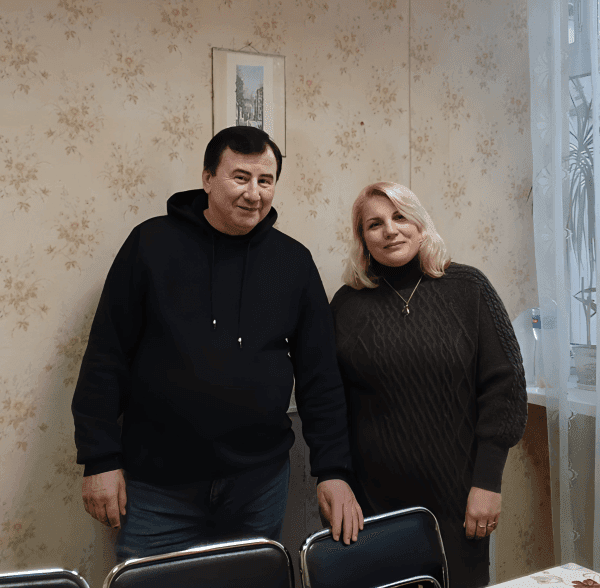
Still looking for competent help and support, Tetiana goes to the Center for Medical and Social Rehabilitation at the municipal non-profit enterprise “Clinical Hospital “Psychiatry”. Or rather, to the NGO "Psychability", which was formed from the community of the Center after its reduction in 2019. At first, our heroine attends group classes, and later begins personal work with clinical psychologist Ihor Nazarenko. In other words, Ihor becomes Tetiana's case manager. Such a position is the prototype of the service "Assistant to a Person with a Mental Disorder", for the introduction of which the NGO "Psychability" is currently actively fighting.
The trials did not end there. In 2023, Tetiana’s ex-husband, with whom they had maintained a good relationship, disappeared on the russian-occupied territory. This was a great shock for the girl. She was hospitalized to a psychoneurological dispensary for the first time. But not for long - in half a year, Tatyana was already studying at the advocacy school . The girl planned to become part of the work group of the NGO “Psychability” within the framework of the advocacy campaign project for the introduction of the service “Assistant to a Person with a Mental Disorder”. However, at the last moment, she refused: “I was not ready yet and was afraid to let people down. I felt that this was not my pace”. Then her second hospitalization followed.
Although Tetiana did not join the project work group, she was still not left out in any way. In particular, together with other artists with mental disabilities, she painted canvas bags, which were then presented to the guests of the round table of the NGO “Psychability” entitled “Paths to a barrier-free life for people with mental disabilities”. Moreover, Tetiana also made a speech at this round table as a representative of the interests of people with mental disabilities in Kyiv city.
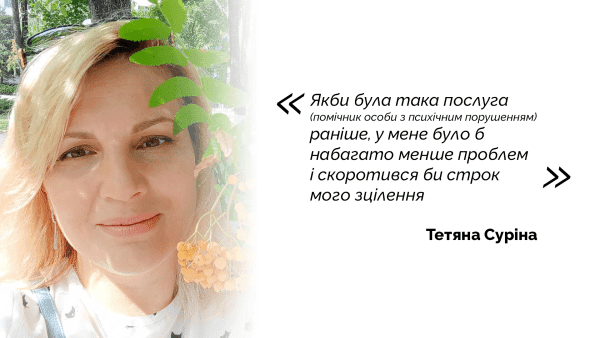
Tetyana sincerely supports the idea of the service “Assistant to a person with a mental disability”. Even though she started working with Ihor Nazarenko when she had already gone through most of the path on her own. This cooperation is valuable and crucial for the girl, especially with the backstory of negative experiences with other psychologists and psychiatrists: “If there had been such a service earlier, I would have had much fewer problems and the time of my healing would have been reduced”.
Tetiana has now been in remission for 4 months, “by 80%”, as she estimates it. “100% will be when I work all the time,” the girl looks to the future as a fighter. She plans to get a degree in psychology, which her assistant Ihor is also pushing her to do. Also, thanks to painting bags for the round table, our heroine discovered her talent and love for drawing. Or rather, she would even say rediscovered it: “I drew well as a child. But when there is no energy for household chores, how do you get to drawing?” Now Tetiana plans to develop this skill and even has her first order for a painting.
Tetiana’s story is a vivid example of how important competent and timely assistance is. If the professionalism of doctors is the responsibility of specialized universities, clinics, and their own, then the role of the state here is to create a clear system of services. It would be even more effective for the state to introduce the position of a person who will know this system and guide people through it. People with mental disorders are just one of those people — they are fighting an internal battle for survival. So forcing them to fight an external battle with the system is at least inhumane, if not illegal.
_________________________
* An estimated 3.8% of the population experience depression
** In Ukraine, the number of prescriptions for antidepressants has increased 2.6 times in the past five years, and more than half of them were prescribed to patients under the age of 40.